
Dryer Vent Cleaning
We clear lint from the accessible dryer exhaust pathway with rotary brush and vacuum equipment, then check airflow before and after so you can see what changed. Most visits take about 30 to 45 minutes.
The Accessible Exhaust Pathway
Your dryer pushes hot, damp air through a duct running from the back of the machine, through a wall, floor, or ceiling, and out to a termination on a side wall or the roof. Lint escapes the machine's filter on every load and settles along that run — fastest at bends, at the flex connector, and at the termination flap where the air slows down.
"Accessible" is the honest word for what we reach on a normal visit: the flex connector, duct a brush and vacuum can travel from either end, and any termination we can get to safely. Duct sealed behind finished drywall or buried in a slab is outside that, and we will say so.
- Typical Duration
- About 30–45 minutes
- Longer Visits
- Long or complex duct runs
- Method
- Rotary brush plus vacuum
- Airflow
- Measured before and after
How the Cleaning Actually Works
Four steps, in the same order on every job, so nothing gets skipped when a visit runs long.
Baseline Airflow Check
We run the dryer and measure output at the termination before touching anything. That reading is the reference point for the after check.
Rotary Brush and Vacuum
A flexible rotary brush is driven through the duct while a vacuum captures what it breaks loose, so lint leaves the run instead of relocating inside it.
Termination Inspection
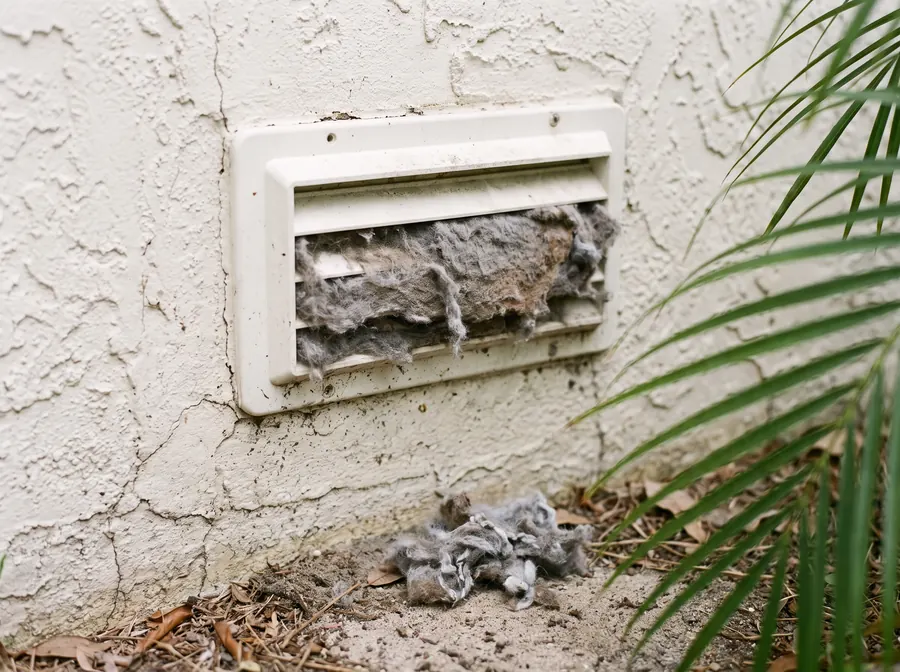
When the exterior termination can be reached safely, we clear the hood, check that the flap swings freely, and look for screens or guards that trap lint.
Recheck and Walk-Through
We measure airflow again, reconnect the dryer, and walk you through what we found — with before-and-after photos when conditions allow.
Every Cleaning Includes
- Rotary brush and vacuum cleaning of the accessible duct run
- Airflow reading taken before and after the work
- Flex connector behind the dryer cleaned and reseated
- Exterior termination cleared and inspected when safely accessible
- Before-and-after photos when conditions allow
- Cleanup of the work area before we leave
Not satisfied? Tell us within 14 days and we'll re-clean the accessible components at no charge, or refund that service. Full terms.
What This Service Does Not Cover
Knowing the edges of the job up front is cheaper than finding them halfway through it.
- No drywall opening. We do not cut into walls, ceilings, or floors to reach buried duct.
- No structural disassembly. Cabinets, closet framing, and built-in surrounds stay put.
- No appliance repair. No heating elements, drums, belts, or control boards, and no disconnecting gas lines.
- No unsafe roof work. A roof termination is inspected only when it can be reached safely.
- Duct replacement is separate. If the flex hose is crushed or torn, we show you and quote the fix on its own.
Heavier obstructions are their own job too. Packed lint, a collapsed run, or a nest at the termination falls under dryer vent blockage removal, quoted after we show you what is in there.
What Changes the Price
No two laundry rooms take the same work, so we quote after seeing the vent rather than guessing over the phone. What moves the number:
- Duct length. A short side-wall run behind a garage dryer is a different job than one crossing the house.
- Number of bends. Every elbow slows the air, catches lint, and makes the brush harder to drive.
- Termination type. Roof terminations take more setup and care than a side-wall hood at ground level.
- Accessibility. A stacked or boxed-in dryer adds time before any cleaning starts.
- Amount of buildup. A vent cleaned last year moves quickly. One never touched does not.
Our post on what affects a duct cleaning quote covers these factors in more detail. If your home has central air, ask about air duct cleaning while we are on site — combining visits saves a trip. We serve Palm Beach County and the Treasure Coast, Boca Raton to Port St. Lucie; see the full service areas list.
Dryer Vent Cleaning FAQ
How long does a dryer vent cleaning take?
About 30 to 45 minutes for a typical run. Long ducts, several bends, a roof termination, or heavy buildup can push the visit past an hour. If we expect that, we tell you on site before we start.
How often should a dryer vent be cleaned?
Once a year is a reasonable baseline for a typical household. Homes running daily laundry, drying pet bedding, or working through an unusually long duct may want to look at it every six to nine months instead.
Do you clean the vent from inside or outside?
Usually both ends. We work the accessible run from the dryer connection, and when the exterior termination can be reached safely we clear and inspect it from that side too.
Do you move the dryer?
We pull the dryer out far enough to reach the connection when the space, flooring, and hookups allow. We do not disconnect gas lines and we do not repair appliances. If the machine is boxed in or the hookup looks unsafe to disturb, we stop and explain the options.
What happens if the vent turns out to be fully blocked?
Packed lint, a crushed or collapsed flex hose, or a nest at the termination is a different job than routine cleaning. If we find one, we stop, show you what is there, and quote blockage removal before doing any further work.
Will I get before-and-after photos?
When conditions allow, yes. Some terminations sit on a roof or behind a fixed cover where a usable photo is not possible, and in that case we say so.