
Dryer Vent Blockage Removal
For a vent that is already severely restricted or fully blocked, not simply due for maintenance. We locate the restriction, clear what is reachable, and verify airflow before we leave — Boca Raton to Port St. Lucie.
A Different Job Than Routine Cleaning
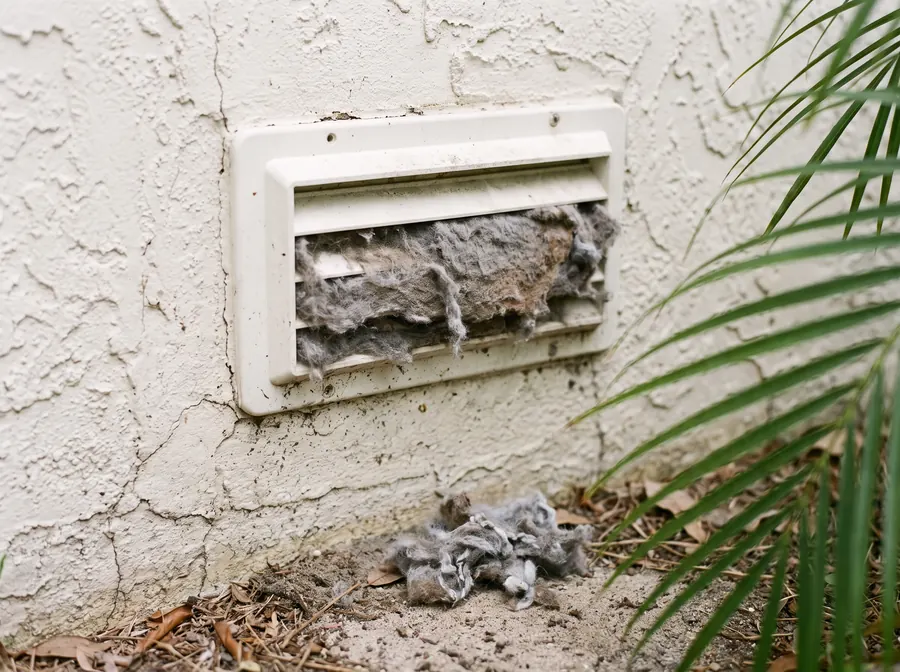
Routine dryer vent cleaning is maintenance for a vent that still moves air. Blockage removal starts somewhere else: the dryer needs two or three cycles per load, the laundry room feels like a sauna, or the machine quits partway through. Air is not getting out, and something specific is in the way.
Rather than sweeping the whole run, we first find where the restriction sits — sometimes right behind the dryer, sometimes at the exterior hood. What we typically find:
- Compacted lint packed solid, often at an elbow or long horizontal run
- Bird or rodent nesting inside the duct near the exterior termination
- A crushed or disconnected transition duct behind the appliance
- Collapsed or kinked flexible duct inside a cabinet or wall chase
- Debris or a stuck damper flap at the exterior vent hood
Signs the Vent May Be Blocked
Any one can point to a restriction. Two or more usually means the pathway is close to fully closed.
Dryer Shuts Off Early
Many machines stop on a thermal limit when exhaust air cannot escape, so loads quit partway through.
Very Long Dry Times
One load needing two or three cycles usually means moist air has nowhere to go.
Hot, Humid Laundry Room
Heat and moisture that should leave the house stay in the room, which feels noticeably warmer during a cycle.
No Flap Movement Outside
With the dryer running, the exterior flap should open. If it stays shut, little air is reaching the termination.
How We Clear a Blocked Vent
Locate the Restriction
We check airflow at the dryer connection and, where reachable, the exterior hood, then narrow down where the blockage sits.
Remove Accessible Blockage
Using rotary brushes, rods, and vacuum equipment, we break down the obstruction and pull it out through accessible openings.
Verify Airflow
We retest with the dryer running to confirm air is moving again, and show you the result rather than just reporting it done.
Inspect the Termination
When the exterior hood is safely accessible, we check the flap, clear debris, and flag anything likely to trap lint again.
Every Blockage Removal Visit Includes
- Airflow assessment at the dryer connection
- Removal of accessible blockage from the vent pathway
- Reseating a loose transition duct when the existing duct is serviceable
- Post-service airflow verification with the dryer running
- Exterior termination inspection when safely accessible
- A plain account of anything we could not reach

What We Don't Do
Being clear about the edges of the job is part of doing it properly. Some blockages sit inside wall cavities or roof runs with no service opening — work we are not the right trade for.
- We do not open walls, ceilings, or soffits to reach a duct run
- We do not perform drywall, roofing, or structural work
- We do not service or repair the appliance itself, only the vent pathway
- We do not access terminations that cannot be reached safely
- We do not guess — if evidence points to an inaccessible run, we say so and tell you who handles it
Not satisfied? Tell us within 14 days and we'll re-clean the accessible components at no charge, or refund that service.
Keeping It From Coming Back
Once airflow is restored, routine dryer vent cleaning keeps the pathway open. Homeowners having the laundry line handled often ask about air duct cleaning or HVAC system sanitization on the same visit. We cover Palm Beach County and the Treasure Coast — see every city we serve.
Blockage Removal FAQ
How is blockage removal different from a routine dryer vent cleaning?
Routine cleaning is maintenance for a vent that still moves air. Blockage removal is for a vent that is already severely restricted or fully blocked, so the first job is locating the restriction rather than sweeping the whole run. Once airflow is verified, regular cleaning is the right follow-up.
What usually causes a fully blocked dryer vent?
The most common are compacted lint packed solid at a bend, nesting near the exterior termination, a crushed or disconnected transition duct behind the dryer, collapsed flexible duct in a wall chase, and debris or a stuck damper flap at the outside hood.
Can you always clear the blockage in one visit?
Often, yes. But some blockages sit inside wall cavities or roof runs that cannot be reached without opening drywall or working at height. That is beyond our scope, and when we run into it we tell you what we found and who handles that work.
Should I keep using the dryer until you arrive?
We suggest limiting use. A blocked vent traps heat and moisture in the laundry room and makes the appliance work harder, which is often why it shuts off early. If the dryer smells hot or scorched, stop using it and call us.